I have been a music software nomad for twenty years. Cubase first, in a studio, on versions that now belong in a museum. Then the strange ones: Reaktor, and Reason, where you flipped the virtual rack around and patched cables by hand as if the computer were a wall of hardware. Then years on Fruity Loops, where I made more music than on anything else. Today I live in Logic Pro. Five or six homes, two decades, and one piece of furniture followed me into every single one of them.
The automation lane. A thin line under the notes that you draw with a mouse to tell the violins how to feel. Louder here, softer there, warmer on this phrase, held back on that one. Every orchestral piece I have ever finished was finished by drawing that line, section by section, one thin curve at a time, hunched toward a screen, translating an emotion into pixels. It works. For people with an academic temperament it is even satisfying. For the visual, physical kind of musician I happen to be, it always felt like the wrong direction of service. I was the one adapting to the machine, learning its dialect, so it would let me say something simple.
Every program I have loved asked the same question with the same thin line: how loud should the violins feel here? And every one expected the answer in pixels.
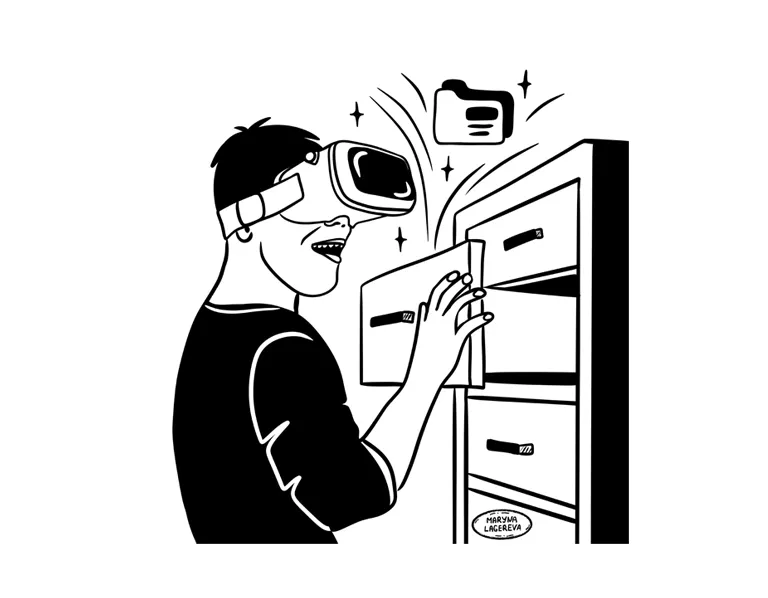
Tutti is the answer I have wanted every time I put on an orchestral record and closed my eyes. A dark stage. The orchestra laid out the way it sits in a real hall, first violins to your left, cellos to your right, brass behind, percussion at the back. Each section is a pool of soft, dark color, breathing with the music as it plays. And the score, already written, flows past you like a river. Your hands do not conduct it. The notes are done, the tempo is decided. Your hands do what the mouse used to do. They shape how it feels. Raise a palm toward the cellos and their pool deepens and swells, and the phrase warms up. Close a hand slowly over the brass and they hold back. Look at the woodwinds, point, and they are yours to sculpt. A finished piece, and you walking through it, adding the emotion with your body.
The stage nobody built
The hands part exists, and it is thriving. Gesture-to-music controllers are a real, active category: webcam tools built by composers who wanted expression to feel closer to conducting than to faders, hand-tracking rigs from major instrument makers, gloves used on stage by well-known artists, a whole lineage going back a decade. I checked all of them, because I assumed someone had built my stage. Nobody has. Every one of these tools hands your gesture to one knob on one track. They are performance tools, played once, forward. There is no room. There is no orchestra in the dark. There is no going back to the phrase you just ruined and doing it again.
That gap is the product. Tutti is a place, not a controller. Spatial mixing already has such places (the tools for immersive cinema sound show you a virtual room and let you move sounds around inside it), and the color side has a hundred years of pedigree, from the abstract animators of the 1930s to Disney’s Fantasia, where an orchestra became light. Composers already read music as shapes on a screen more fluently than as dots on a staff. Tutti just gives those shapes a stage, a third dimension, and your hands.
Key Features
- The stage. A dark hall with the real seating plan of an orchestra, each section a slow-breathing pool of color, brighter and deeper as the music grows, dim as it recedes. The plumbing that turns gestures into instrument data lives under the floorboards, where you never have to see it.
- Look, point, shape. Choose a section with your gaze or a finger, then shape its feeling with the hand: rise and sink, tense and release, warm and cool. Broad emotional strokes, not knob-twisting.
- The river. The piece flows past; grab it and pull it back. Redo a phrase, layer a second pass on top of the first, compare, keep the one that moved you. Editing, not just playing.
- Listen mode. Load any piece and simply watch the stage breathe, section by section. The same room that lets you shape a score also lets you feel one.
- Fits your studio. Tutti is a mode you step into for the expression pass, the way you step into a mixing room. It talks to Logic, and to anything that will take MIDI or automation data, and hands the result back as ordinary data your project already understands.
The honest tensions
Tutti does not replace the thin line, but it changes who draws it first. The hands own the phrase, the mouse keeps the surgical corrections, and that division is right, not a compromise. It has plumbing to do that nobody will find glamorous. Every maker of orchestral sounds speaks a slightly different dialect of expression, and Tutti has to translate all of them into one stage. And listen mode is honest about its limits. It works beautifully on your own projects, where it knows every section, and only roughly on a recording of a real orchestra, where separating the cellos from the violas is still research.
One objection I want to dismiss, because I have heard it about every gesture tool, is that your arms will tire. They would, if you were drawing precision curves in the air for a shift. But a piece of music lasts three to ten minutes, and what you are doing in Tutti is feeling, not precision. It is broad, slow, whole-arm honesty about how a phrase should land. Nobody gets tired feeling a symphony. They get tired clicking.
Monetization
A subscription for the app and its studio plugin, priced like the serious creative tools composers already pay for. The more interesting money is upstream. The companies that sell orchestral sound libraries live and die on expressiveness, and a stage designed to make their instruments feel alive is a partnership waiting to be signed, bundled or licensed. Conservatories and film-scoring programs are a natural third door, since a stage that makes dynamics visible is a way to teach what they are for.
Next Steps: How I’d Build It
Not a weekend, but not a laboratory either: a consumer headset with good hand tracking, one section, one pool, one axis of feeling, synced to Logic. If shaping a single string phrase with a palm produces the emotion you meant, the rest is furniture. Then the full seating plan, the river, and listen mode, which comes almost free once the stage exists. A season of work for one developer who knows 3D and one composer who is tired of the thin line. I know at least one of those.
Tutti, danced
And now the paragraph I could not resist. If a hand can shape how the cellos feel, a body can shape the whole hall. Picture the stage watching not two hands but a person, reading the entire body in real time through a camera or a suit. Now bring in a dancer. Not to illustrate the music, which is what dance on stage has always been asked to do, but to write its expression: every reach becomes a swell, every collapse a hush, every held stillness a breath the orchestra takes with her. The two oldest human arts, movement and music, exchanging data for the first time in both directions.
Dance predates every notation we have. Bodies were shaping music before anyone wrote a note down. Tutti, danced, would record that shaping as something a score can keep. A choreographer could interpret Mahler with her spine and leave behind an expression layer another orchestra could play. I do not know what that does to how we hear music. I suspect it is a lot.
Closing
Tutti is the stage I have built in my head every time I listened to an orchestra with my eyes closed, finally with the lights on. Twenty years of drawing feelings with a mouse, and a room where you can just make them with your hands. And if the Devil’s Trill recorder ever gets built, this is the room it empties into, where the music caught at 6am is shaped by the same hands that failed to hum it.
If you build this, tell me, and let me do the first expression pass. I will be the composer in the corner, palms open toward the cellos, making very small movements and very large faces.