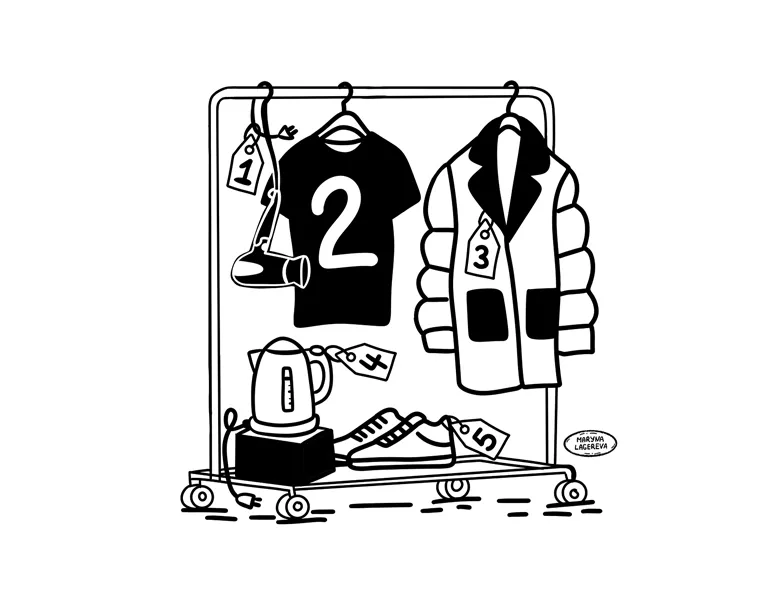
I am an avid music fan, and the hassle I want to kill is specific: I finish an album, I want the shirt, I open the artist profile, I get a vague store link or nothing, I search the name plus “merch,” I land on a shop that may or may not be theirs. Doing that for five artists in a row is how an evening disappears.
Spotify is great at playing music. It was never built to sell me a hoodie, and you feel it the moment you try to browse merch for more than one artist in a row.
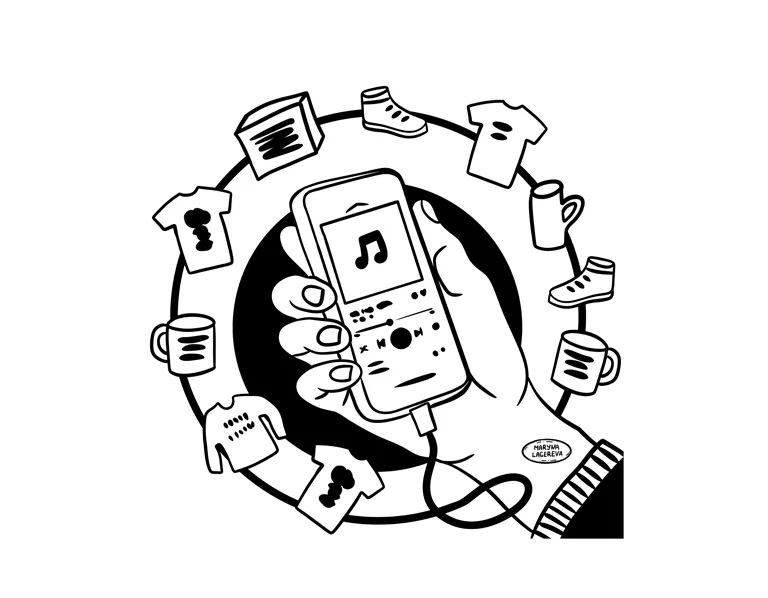
FanVault is the page I wanted instead. You connect a Spotify account, see your top artists, and get their official merch in one place. That evening, collapsed. No more hopping from a label shop to a Shopify theme to a dead Bandcamp button. To be clear, this is a fan-made concept with no affiliation to Spotify. It would build on their public API, if its terms allow it.
Official merch first, from the artist or the store they point to. A trusted long tail (Amazon, a couple of big merch platforms) only where the official shelf is empty. The job is a reliable selection, not every bootleg hoodie on the internet.
I would keep the interface familiar to a Spotify user on purpose. The less you have to learn, the faster you get to the shirt.
Market & Opportunities
Music merch is a real business, especially after streaming ate most of the album sale. I will not hang a global licensing figure or a Spotify user count on that sentence. The demand I trust is the one I have. I already know who I listen to, and I still cannot buy their merch without opening five tabs.
Who shows up first: people who already live in Spotify and already own one tour shirt. Who pays: nobody, at first. The site takes a cut when a click becomes a sale. Artists and stores get a visitor they did not have to design a page for.
The gap is not “fans do not want merch.” The gap is that the merch is scattered and the streaming app will not be the store. A third-party catalog that is honest about being partial can still be useful. A catalog that pretends to be complete will lie in the first week.
This is not a new Spotify, and it is not a concert app. Tickets, forums, and fan art can live somewhere else. If the first version cannot show a shirt for the artist I played this morning, the rest is decoration.
Key Features
- Spotify for the taste, not for the stock. Connect an account, pull top artists and recent listening, build a merch home from that list. Nothing else needs to come from Spotify.
- A catalog that grows store by store. Shopify here, Bandcamp there, a label shop next month. Coverage starts partial and says so on the artist page.
- Browse without the feed becoming a mall. Genre, artist, “new this week.” Filters that find a vinyl or a shirt. Not a recommendation engine that has opinions about your identity.
- Buy on the store that actually stocks it. Deep link, affiliate if the program exists, a clear price. In-app checkout for every shop on earth is a fantasy. Do not ship it as one.
- Official first. If the item is not from the artist or a store they stand behind, it does not sit next to the official pile. Third-party results, if they exist, are labeled.
Exclusive drops and a peer-to-peer closet for old tour shirts can wait. Those are how this idea becomes a marketplace with a music skin. Get the official shelf right first.
Monetization
Affiliate commissions are the straightforward engine: a click, a sale, a cut. Rates will differ by store and you will not get a deal from every artist on day one.
Sponsored placements can exist if they are labeled and if they cannot bury the official item the user came for. I would not fund the homepage with display ads for concert bundles. That is how a merch finder becomes a banner farm.
Consignment and resale are a later chapter, and a legal one. Counterfeit lives there. I would not open that door until the official catalog is boringly trustworthy.
Next Steps: the part that is actually hard
Pulling your top artists from Spotify is the easy half. The Spotify API hands that over once a user connects their account. The merch is the hard half.
There is no single “artist merch” API.
Official stores are scattered across Shopify, Bandcamp, label shops, and bespoke sites, each with its own format, and Spotify itself exposes no merch feed. So “all their merch, automatically” is the promise and the wall at the same time.
The MVP does not try to cover everyone. Start with the merch sources that offer a clean feed or an affiliate API (a few big artist-store platforms, plus something like Amazon for the long tail), aggregate those well, and be upfront that coverage is partial. Grow it store by store. A thin, reliable catalog beats a “complete” one stitched from scrapers that break every week and may run against a store’s terms of service.
The first test I would run is ten artists I actually listen to. If eight of them have an empty shelf, the idea is a bookmark list. If five have a real shirt I can buy in two clicks, you have a pulse. Then add the next store, not the next social feature.
Read the Spotify terms before you write the connect button. Their developer policy forbids using Spotify data to build user profiles for advertising or marketing, and a merch page assembled from someone’s top artists lives close enough to that line that you want an answer, maybe even Spotify’s answer, before you build. Read the affiliate terms too before you promise Amazon as a backfill. A fan app that gets its API access pulled is not a merch app. It is a eulogy.
Bonus: counterfeit, and the rest of the ugly shelf
Counterfeit is the real one. Vet sellers, prefer official URLs, and take a listing down when a rights holder asks. I would not dress that up as blockchain authentication.
Copyright and trademarks are the same problem in a lawyer’s font. A report button that reaches a human is worth more than an automated scanner you do not have.
User reviews, if you add them, will attract the usual sludge. Guidelines and a queue. The catalog can live a long time without reviews. I would rather ship ten official stores and no comments than a comment section sitting on empty artist pages.
Closing
FanVault points your Spotify taste at official merch, with a catalog that admits it is incomplete. I have wanted this exact app for years. A thin shelf I can trust beats a mall that might be selling someone else’s tour.
If you build this, I want to hear about it, and I would be your first user. Take the idea, rename it, change whatever you like. You owe me nothing, just tell me how it goes.