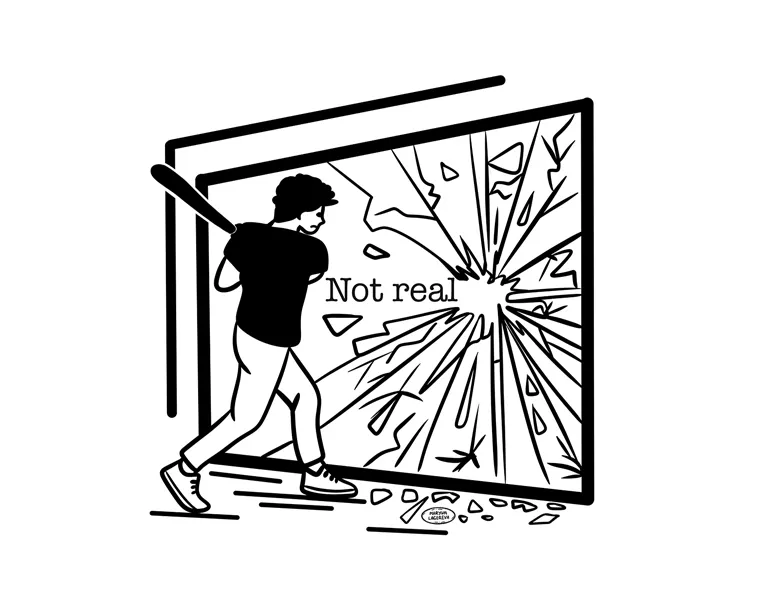
At the agency, I was managing more than 130 client accounts a month. Most days that was fine. Some days, what I needed at 7 pm was not a meditation app, it was somewhere to let the pressure out, loudly, without consequences and without breaking anything that costs money. That is where this idea comes from. It is a place to smash something that is not real, blow off the steam, and put the phone down calmer than you picked it up.
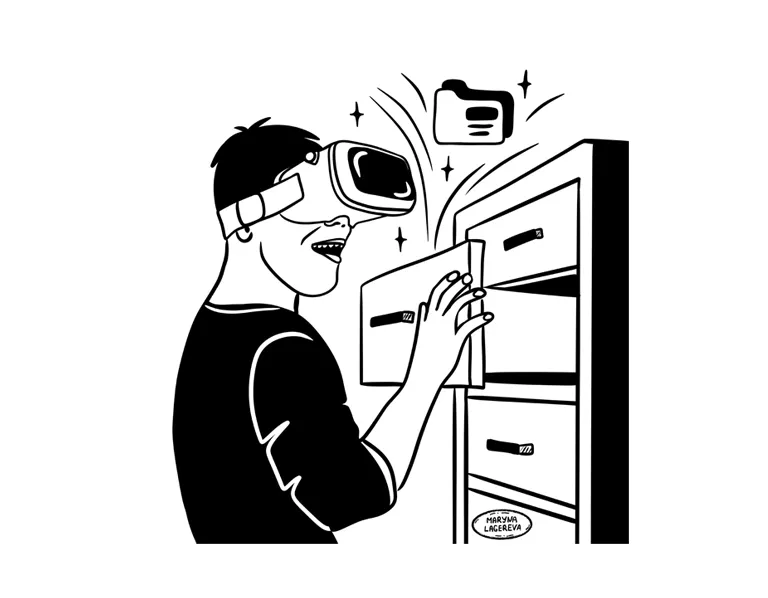
You have probably heard of rage rooms, those places where you pay to smash old printers with a baseball bat. I love the concept and hate the logistics. You have to book, drive there, wear goggles, and pay for every plate. My idea is the same release, but virtual. In a simple app, on a phone or a VR headset, you pick a generic cartoon avatar or a symbolic object, and you get a few minutes of gloriously silly destruction. Smash it, drop a piano on it, watch it crumble. Then a short breather, and back to your evening.
The key word is generic. The avatars are stick figures and cartoon characters from a built-in library. You can tweak a hairstyle or an outfit, but you cannot upload photos, real faces, or company logos. This is deliberate and non-negotiable.
The moment the thing on screen looks like your actual boss, the app stops being a pressure valve and starts being something darker.
Symbolic targets only, always.
What this is, and what it is not
It’s a playful outlet, a way to vent, not therapy and not a treatment. And I want to be careful here. The old “let it all out and you’ll feel calmer” idea is actually contested by researchers, and some studies find that rehearsing aggression can feed it rather than drain it. So the promise is small and human. A few minutes of silly, satisfying destruction might take the edge off, inside guardrails (short sessions, a breathing prompt, links to real help if someone needs it). This is not a clinical claim to reduce real-world aggression.
That framing shapes the whole product. Sessions are short by design. The tone is cartoonish, not gritty. And the app is upfront about its own limits. If someone is using it every day for hours, the right move is to gently point them toward real support, not to sell them a bigger hammer.
Market & Opportunities
Who it’s for
The obvious users are people like me on a bad Tuesday: professionals, students, parents, anyone in a high-pressure stretch of life who wants a quick, private way to decompress. My guess is the core audience skews 18 to 35, people who already treat their phone as a wellness tool, but frustration has no age limit. Anyone who has ever wanted to throw a laptop out a window is a potential user.
Why this gap exists
The stress relief app market is crowded, but it is crowded on one side of the room. Headspace, Calm and their many cousins are all about slowing down. Breathe, meditate, listen to rain sounds. That works for a lot of people a lot of the time. But some days you are not in a slow-down mood, you are in a get-it-out mood, and for that mood the app store has very little to offer.
The missing piece is an active outlet instead of a passive one. Rage rooms prove the demand exists, since people literally pay to break things. A virtual version removes the cost, the travel, the broken glass and the cleanup, and it is available at 7 pm on a Tuesday in your living room.
Room to grow
Stress is not going anywhere, and neither are phones and headsets. A digital product like this can launch small, in one language and one market, and scale from there. Frustration translates well. I would still validate the retention question early. Is this something people come back to weekly, or a novelty they try twice? That single metric decides whether this is a business or a toy.
Key Features
Avatar library and symbolic targets
Users pick from a library of generic figures: stick people, blobby cartoon characters, and a set of symbolic objects for non-human stressors. A ringing phone for the inbox that never stops. An alarm clock for the deadline. A tiny cardboard office for the whole open-space experience. Light customization is available (hairstyles, outfits, accessories), but as said above, no photo uploads, no real faces, no logos, ever.
Guided smash sessions
Destruction comes in flavors. The physical kind means smashing, crumbling, tearing, or whacking with an oversized cartoon mallet. The environmental kind places the avatar in a scene and lets a storm or a tiny earthquake do the work. The abstract kind, for quieter moods, lets you watch the thing slowly fade or dissolve into confetti. Satisfying sound effects throughout, because half the relief is in the crunch.
Every session is framed and capped. After five to ten actions, the app asks you to take a short breathing pause before you continue. That cap is a feature. The point is a quick release with a calm landing, not an hour of stewing in your own anger. After each session the avatar resets, ready for the next bad Tuesday.
Optional check-ins
After a session, the app can ask one or two light, optional questions. What got to you today? Did this help? Users who opt in get a simple personal log over time (which triggers came up most often, which methods they favored, how sessions trended). It is a mirror, not a diagnosis.
The same check-ins power the safety net. If someone’s usage pattern looks like reliance rather than release (long daily sessions, weeks on end), the app quietly suggests other coping tools and links to real professional resources. Aggregated and anonymized, the data might also one day say something interesting about what stresses people out in different places, but that is a distant maybe. This is a pressure valve, not a public health observatory.
User experience
The whole flow should take under a minute from opening the app to first smash. A short onboarding, a clean interface, and saved favorites so your go-to avatar and go-to mallet are one tap away. An optional community space lets users swap stress management tips and laugh about their week, with moderation to keep it kind. Cross-platform from the start, with the phone first for reach and a VR headset for the full swing-your-arms experience.
Monetization
Freemium base
The free tier gives everyone the core loop: a handful of avatars, basic customization, and two or three destruction methods. Enough to feel the relief and decide if it is for you. Paying should never be the price of calming down.
In-app purchases
The fun stuff is where the money is. Elaborate destruction tools, like a trebuchet, a black hole, or a stampede of llamas. Extra avatar outfits and accessories. Special environments, seasonal or absurd (office at Christmas, tax season bunker, Monday morning simulator). None of it gates the basic release, all of it makes the release funnier.
Subscription
A monthly membership bundles the extras: early access to new tools and environments, an ad-free experience, the premium community space, and the personal insights log with longer history. Subscribers get depth, while free users still get the full pressure valve.
Ads, carefully
Light, clearly separated ads can support the free tier, shown between sessions and never during one. Brand partnerships could work for cosmetic content, a sponsored silly environment for instance, but never as destruction targets. You do not get to pay to have people smash your competitor. That door stays closed.
How I’d Build It
The technical shopping list is refreshingly boring: a game engine with decent physics (Unity or Unreal both do cartoon destruction well), a built-in avatar system, cloud accounts, and a standard payment stack. Nothing here requires inventing new technology, which is what you want for a first version.
The MVP is one avatar, one room, three ways to smash, and the session cap with the breathing prompt. Put that in front of fifty stressed humans and watch two numbers. Do they smile, and do they come back next week? If both answers are yes, expand the library, add the check-ins and the community, then the subscription. If not, you have spent a small budget learning something true.
Bonus: keeping it from turning ugly
An app about venting anger has an obvious dark side, and pretending otherwise would be naive. Here is the guardrail set I would ship from day one.
Symbolic only, enforced. No user uploads of faces or logos, no naming avatars after real people, and filters plus human moderation to catch workarounds. The whole design keeps targets abstract, because the abstraction is what makes this a game and not a rehearsal.
Session caps and cool-downs. The five-to-ten action limit and the breathing pause are hard-coded. The app is built to end sessions, not extend them.
Reliance flags, handled with care. Usage patterns that look like dependence trigger a private, gentle nudge toward other resources and professional help. Support, not surveillance. The data serves the user, never a punishment system.
Community standards. Clear rules in the community space, age verification, and a simple reporting flow with transparent follow-up. Repeat harassment gets people removed. The venting happens at cartoon avatars, never at each other.
Closing
Strip away the feature list and this idea fits in one sentence. Rage rooms are fun, and a virtual one in your pocket would be cheaper, safer and available exactly when the bad day happens. Keep it symbolic, keep it short, keep it honest about what it can and cannot do for your head, and I think there is a real product here, somewhere between a game and a very loud sigh.
If you build this, tell me, and send me a code. After some agency days, I will be your best beta tester. Take the idea, rename it, reshape it. You owe me nothing, just tell me how it goes.