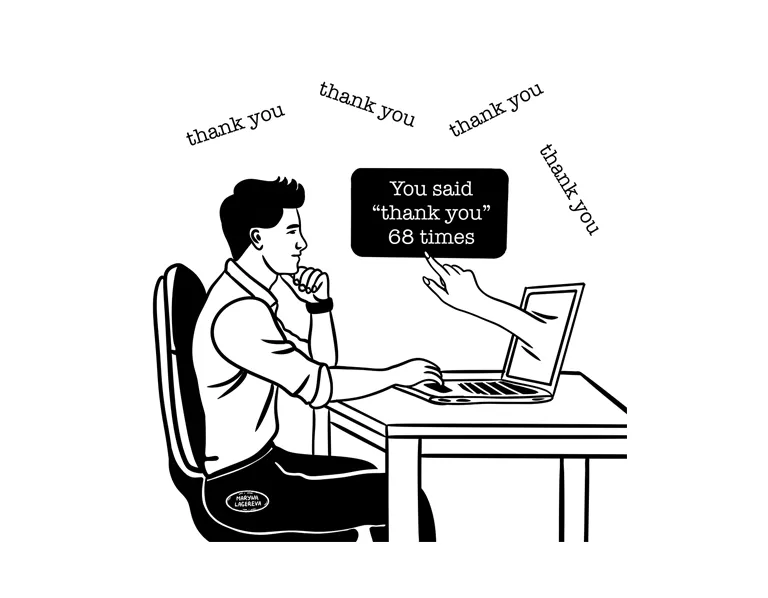
I thank GPT after almost every answer. I know, I know. Does GPT even care? Probably not.
But it makes me wonder about everyone else. Are you a polite AI conversationalist, or do you keep things transactional? Some people, like me, treat it as a digital companion. Others take the direct approach, a tool that does not need the niceties. I have no idea which one I would rather be, and I would very much like to see the number.
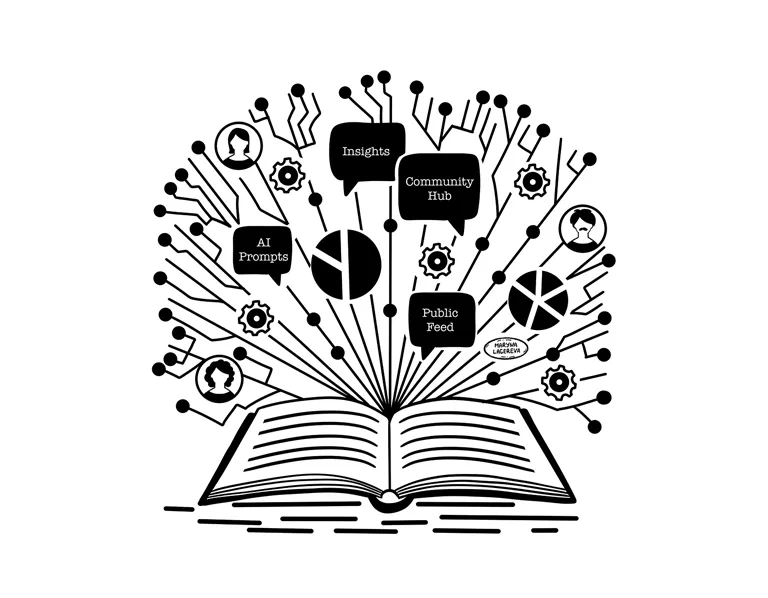
GPT Stat Central is the Wrapped I want for that habit. You hand over your official chat export and get a snapshot: how often you thank the model, how long you stay, whether you write novels or one-liners, whether you come back to the same question as if you were checking reality. Casual or power user. Creative prompts or strictly business. Love and family, or geopolitics and code.
It is a playful dashboard, not a personality lab, and not an institute. I want to know my thank-you rate. I would like to laugh at it with a friend. That is enough of a product.
I built it, later, under a cleaner name. It is live at anonwrap.com. It turns your ChatGPT or Claude history into a personal Wrapped of ten animated cards, computed entirely in the browser. Nothing uploaded.
I am not trying to diagnose anyone. I am trying to make a private joke measurable. If the page comes back sounding like a report card, rewrite the copy before you add another chart.
Market & Opportunities
People already screenshot a funny chat. They do not already have a page that counts the year. The gap is the same shape as Spotify Wrapped: a file you already own, turned into a story you might share.
Who shows up first? People who have been talking to a model long enough to be a little embarrassed about it. Who pays? Anyone who wants last year’s picture, and later a team that wants a boring aggregate (“support drafts a lot, sales barely opened it”) and nothing else.
I will not hang a global AI-market figure on this, and I will not call it a Myers-Briggs for prompts. The relevant market is “I export my data once a year and I want a poster.” Duolingo and Strava proved people will wear a streak. They did not prove the world needs a new social network. I would steal the shareable card and leave the feed.
Key Features
- A dashboard that starts with the thank-yous. Session counts, average length, please and thank you, creative versus technical. A snapshot, not a cockpit.
- You against the pile. Optional comparison to anonymized totals from other exports. Are you alone in writing novel-length prompts? Fine. Are you in the middle? Also fine.
- Badges you can turn off. “Top Thanker,” “Long-haul,” a score if you want one. A public card if you want one. Private by default.
- A category split. Productivity, writing, code, research, casual. A trend line across imports, so you can see a month of code and a month of something else.
- A monthly or yearly Wrapped. Peak hours, longest thread, whether you are a morning user. One image you might send to a friend. That image is the product.
I would not have the model write you a note about “balancing your usage.” That is a wellness product wearing a chart. Count the words. Leave the advice.
How the file actually gets in
There is no API that streams your ChatGPT usage to a third party. The data has to come from you. The workable path is the official ChatGPT data export. You download the archive and hand it to the app, which parses it.
This is batch analysis of a file a user gives you, not a live tap on OpenAI.
Less dramatic, actually buildable, and far easier to promise privacy on. The work is then ordinary and still hard: keep up when the export format moves, run as much as you can in the browser so raw threads never have to leave the machine, survive a dozen chats and survive five years of daily use, and accept other providers later, because GPT is not the only player in town.
If parsing happens on the user’s side, the service only needs the derived stats: counts, categories, trends. Never the conversations. That is still enough to tell you how many times you said “please” this year.
Monetization
A free pass that gives you the thank-you count and one Wrapped. A premium around ten dollars a month (or a cheaper yearly) for history, extra breakdowns, and a nicer card. I would not invent a Pro tier just to print an API.
There is a team version of this, but it has to stay on the right side of a bright line. Aggregated and anonymized, never individual scorecards. A company could see that its support team leans heavily on AI for drafting, or that adoption is uneven across departments. Useful, boring, aggregate stuff.
What it should never get is a per-employee “AI efficiency score” feeding into performance reviews. That is surveillance dressed up as analytics, and the fastest way to make people resent both the tool and the AI. If the team product cannot be built without individual rankings, it should not be built.
I would not open a marketplace of third-party “insight modules.” That is how a Wrapped becomes a junk drawer of other people’s psychology.
Bonus: what this file contains
People put real things into these chats. The app should keep derived stats, let the user delete them, and say plainly that it will not sell the pile or hand it to an employer’s HR dashboard. Categories that look like emotional support or private writing should be opt-in, or not computed at all.
I would not add a feature that watches for “unhealthy” usage. That is a health claim I cannot stand behind. If someone imports every day, they get a chart. They do not get a lecture.
Next Steps: How I’d Build It
The first version is already at anonwrap.com. What follows is still the honest path, for a replica or a cousin in another domain.
A weekend: accept one official export, count thank-yous, session length, and a crude category split, render a single share card. No badges, no team, no comparison. If ten people will import a real archive to see that card, the idea has a pulse.
Do the parse in the browser first, even if it is slow. The moment raw threads hit your server “just for a minute,” you have become a different company. Say that on the upload page. People who will not upload after reading it were never going to be happy customers.
Then local parsing, then the comparison pile, then the yearly image. The wall is not the chart library but getting anyone to upload a year of chats they were not already going to screenshot. Start with people who already joke about thanking the model. I would be in that line.
Closing
GPT Stat Central, shipped as AnonWrap, is a Wrapped for the way you talk to a machine, built from a file you chose to hand over, with a hard no on turning it into a score for your boss.
Go get yours at anonwrap.com. If you build the writers’ version, or the team version that stays on the right side of that line, tell me. You owe me nothing. I still want to know your thank-you rate.