I do not have a burglary story to open with, thankfully. What I have is a colder observation. Home security is one of those quiet, universal worries, and for the first time the technology to do something different about it exists. Ten years ago this concept was science fiction. Today the pieces, autonomous flight, thermal imaging, smart-home integration, are all real, even if the law has not caught up (more on that below). What I wanted to sketch is what those pieces add up to. Not another lens bolted to a wall, but something that can actually go and look.
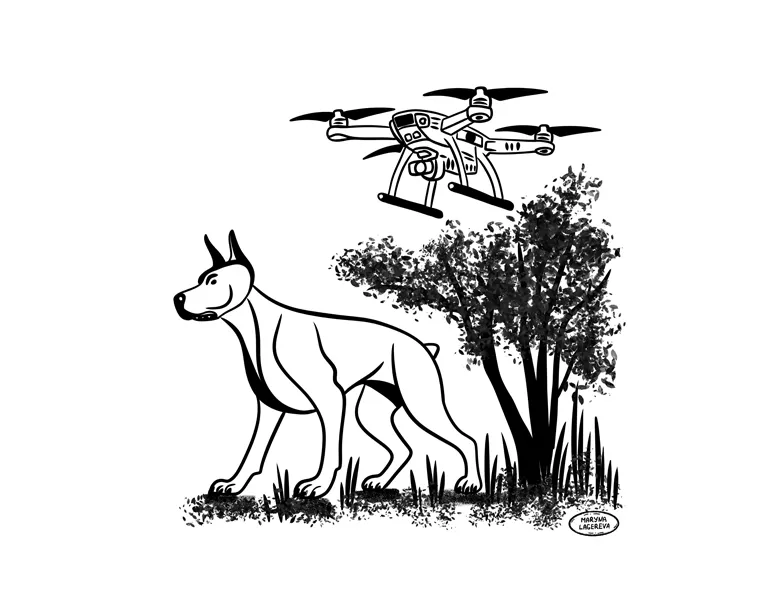
A dock on the roof. A small aircraft that sits there, charges, and goes to look when a sensor asks it to, or when you tap a phone because you heard something. Thermal and night vision for the dark. A follow if there is a person where there should not be one. A two-way speaker if you want to say “I see you” from another country.
Every piece already exists.
What stands between this sketch and a product on a shelf is regulation, not engineering.
The reality check further down takes that seriously. The shift is real, from seeing what happened after the fact to going to look, on a timeline set as much by regulators as by engineers.
Market & Opportunities
People already buy cameras and alarms. Those sit still. The gap is a property too big, too dark, or too far from a road for a doorbell to help: a house with a garden, a driveway you cannot see from bed, a place you leave empty for a week.
I will not hang a home-security market figure on that, and I will not sell peace of mind as a feeling. Who might pay, when the law allows: owners of larger lots, and later a security firm that wants a patrol it does not have to staff. Who should not: anyone who wants to watch the street. That is a different product, and a worse one.
Smart-home hooks (a sensor, a phone alert) are how this joins a house that already has cameras. They are not a reason to skip the legal section.
Key Features
- A patrol you schedule, or a launch you trigger. Routine passes over the parts of the lot you care about, and an instant launch from the phone when something sounds wrong.
- Eyes that work in the dark. Night vision and thermal, so a person and a fox are not the same blob.
- A follow that stays on your side of the fence. Track a path, record it, alert you. The fence is not optional; see the beacons below.
- A speaker on the aircraft. Two-way audio from the phone, if you want a voice in the garden. Off until you press it.
- A dock that is boring. Charge, sit, launch. Solar is a nice extra for a remote lot. Weatherproofing is required. Neither is the idea.
GPS is the obvious way to draw a boundary, and it is also the wrong tool this close to a house. The signal bounces off walls and drops out under the eaves, which is exactly where the drone flies.
The fix is physical. Small beacons fixed along the roofline and the edges of the property, using short-range positioning such as ultra-wideband, give the drone a centimeter-accurate sense of where the property ends. The geo-fence stops being a hopeful GPS estimate and becomes a measured wall the aircraft is programmed never to cross, holding up precisely in the low, cluttered airspace next to a building where satellite positioning is least reliable.
Monetization
Sell the aircraft and the dock. A subscription for updates, encrypted cloud clips, and support. A security company can bundle it later. I would not hide the aircraft behind a software lock. If the subscription dies, the thing should still launch and still refuse to cross the beacons.
Misuse: the neighbor’s side of the fence
Geo-fencing your own property is necessary but not sufficient. A drone at altitude with thermal and night vision inevitably sees over the fence. A responsible version has to treat the neighbors’ privacy as seriously as the owner’s, no recording beyond the property boundary, cameras that cannot capture a neighbor’s window, and a clear answer to the reasonable fear that the thing hovering next door is filming you.
Users can mark privacy zones on their own lot (a window, a terrace) where the camera will not record. Containment itself rests on the beacon fence described above, not on a GPS estimate.
Footage should be encrypted, and a zero-knowledge store is the version I would trust. “Authorized users only” is a slogan until the architecture says who cannot see it.
A regulatory reality check
This has to be said plainly, because it is the difference between a concept and a lawsuit. The problem is not flying a drone over your own garden at a legal altitude. Plenty of people do that every weekend. The problem is that nobody is holding the controls. In the US, FAA rules are built around a pilot keeping the aircraft within visual line of sight, and they restrict night flight and flight over people. A drone that launches itself and patrols while you sleep, or while you are on vacation, is what the rules do not allow for consumers today. Europe (EASA, and DGAC in France) and Canada (Transport Canada) are built on the same principle. Autonomous, pilotless patrol falls into authorization categories that ordinary homeowners cannot realistically obtain yet.
So this is a forward-looking concept, not a product you could ship next quarter. The realistic near-term version stays inside the law: piloted on demand rather than fully autonomous, strictly within your own property line, and honest that “autonomous sentinel” is where the category is heading once regulation catches up, not where it is now. It is telling that the closest thing to a product, Ring’s indoor flying camera (invitation-only since 2021, never widely released), stays indoors, where aviation rules do not apply.
There is a middle path worth exploring: put the drone on a leash. A tether, a thin cable that powers the aircraft and physically limits how high and how far it can go, changes the picture. It hard-enforces the altitude cap and the property boundary (no flyaway, nothing drifting over the neighbor’s garden), and several jurisdictions already treat captive aircraft more favorably than free-flying ones. Tethered systems are sold to fire departments today precisely because the cable removes much of the certification burden. A tethered HomeGuard watching the driveway and the back door trades coverage for legality, and it might well be the version you could actually ship first.
Next Steps: How I’d Build It
Build the legal half first. A piloted, on-demand aircraft that will not cross a beacon fence, on a tether if that is what a lawyer in your country will sign. One garden, one dock, one phone trigger. No patrol while you sleep until the rules say you may.
The order matters. The dock and the beacon fence are ordinary engineering and you can build them in a garden. The autonomy is the part that waits. Do the boring half first and you have something a lawyer can look at; do the flying half first and you have a demo you cannot sell.
Pick the country before the hardware. The rules that decide whether this is a product or a hobby are national, and a tether that satisfies one regulator is not automatically enough for the next. Read your own aviation authority first, design the aircraft second. That order is the whole business plan.
If that version is useful (you heard a noise, you looked, you went back to bed) you have a product that can wait for autonomy. If it is a worse flashlight, the sketch was only a sketch.
Closing
HomeGuard is a thing that goes and looks, when the law allows, and it has a tethered cousin that might be legal sooner. The technology is not the mystery. The boring half is.
If you take a run at this, even just the piloted, stay-inside-the-fence version, tell me. This is one of those ideas where the builder who solves the boring legal half wins the whole category.