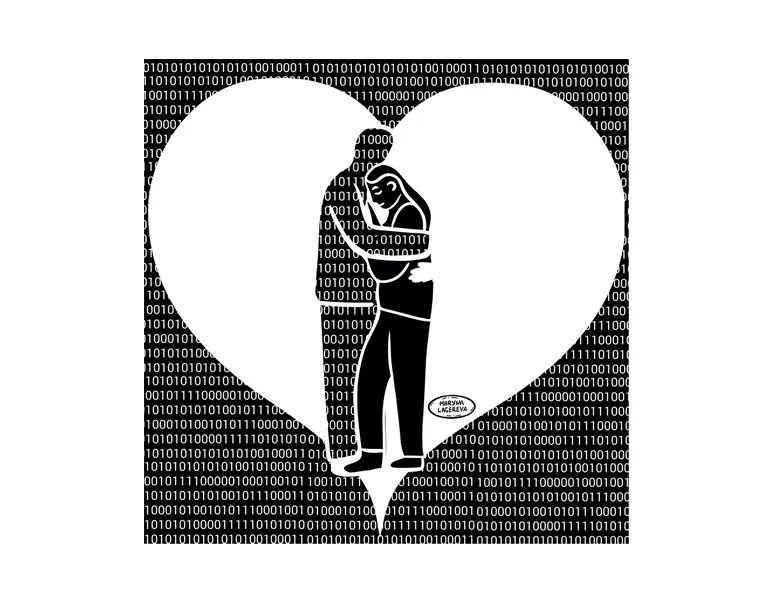
Let me open with a confession that doubles as market research. Over the years, I have made at least five of these pacts. You know the one. A late dinner, a certain kind of laugh, and someone says it, half joke, half not, while looking slightly past you: if we are both still single at forty, we marry each other. Deal. Everyone laughs, nobody writes anything down, and the pact evaporates by morning, surviving only as a warm little clause in the back of two heads.
Five different people. Five pacts. I am, apparently, heavily over-subscribed on a contract that nobody has ever drafted. When I dug those memories up, I realized I would like to reactivate them, and that I have no mechanism to do it. Which phone number? Whose memory? Who brings it up first, and how, without it being weird? The pact is one of the most widely signed agreements in human culture, and it has a one hundred percent enforcement failure rate.
Pact is the app that takes the joke seriously. Two people seal their pact for real: names, birthdates, the trigger date, both signatures, today. Then it sleeps. Years. On the day, each of you gets the same quiet question, are you single, and are you still in? Only a double yes opens a private room and lets the conversation begin. Any other combination, a no, a silence, a pact defused years earlier, produces nothing at all, forever, for both of you.
The silence is the product
Every design decision follows from one rule. Nobody ever learns what the other answered, unless both said yes. That double-blind is the entire emotional architecture. It is what makes it safe to say yes at forty (you risk nothing, a lonely yes is never exposed) and safe to say no (you break nothing, your no is indistinguishable from the service never asking). Silence is deliberately ambiguous. Maybe they said no, maybe they dissolved the pact in 2031, maybe they never saw the message. Ambiguity is mercy.
The same rule shapes the rest. The pact is mutual at creation, always. Both parties sign at sealing, so nobody is ever secretly named, and nobody discovers at forty that they starred in someone’s plan for twelve years without knowing. And either party can defuse the pact at any moment, silently, with no notification and no guilt trip. The trigger day simply never comes. People marry, drift, change. The exit has to be as gentle as the entry is playful.
The prior art makes the positioning easy. Stanford’s Marriage Pact, a real and clever company, runs the inverse concept. A questionnaire assigns you an algorithmically optimal backup stranger on your campus. Pact holds no algorithm and offers no strangers. It contains exactly one person, chosen by you, already loved in whatever complicated way produced the joke in the first place. It is the anti-dating app. Zero discovery, pure commitment infrastructure.
Key Features
- The sealing. A small ceremony by design: both confirm identity and birthdate, read the terms aloud (the app insists), pick the date, sign. A pact deserves more gravity than a checkbox. Several pacts are allowed (I am not judging; I am the market); the app staggers their trigger dates and enforces one pact per pair. If two of yours fire in the same season, that is not a bug, that is your third act.
- The sleep, with a heartbeat. Every two years, a gentle re-confirmation: still in, still at this address? It refreshes contacts, revalidates consent, and proves the service is still alive.
- The trigger. On the day: one question to each, separately. Double yes opens the room. Anything else is eternal, indistinguishable silence.
- Silent defusal. One tap, any time, no notification to the other side. The kindest exit in software.
- The certificate. At sealing, both receive a beautiful document, print or PDF, that contains the entire pact: full names, birthdates, date, terms. Not a pointer to the app; the protocol itself, executable by two humans with no company in between. And a lucid note on what it carries: contact details rot in twenty years, so the durable payload is identity and, above all, the mandate, we signed, you have the right to come looking for me. Each heartbeat reissues it with fresh coordinates.
- The witness. Pacts are born in groups, so the sealing invites one: a lifelong friend, a sibling, the person laughing at the table when the joke was made. Ritually, they countersign. Practically, they are the disaster-recovery layer no technology matches, a human who can still find both of you in fifteen years, long after every phone number on the certificate has died.
- The meeting clause (optional). The cinematic tier: at sealing, a pair can also fix a place and an hour. Not a café, cafés close; a landmark, a fountain, a bridge, the kind of spot cities keep for centuries. If everything else has rotted, the pact still executes the oldest way there is: on the date, at noon, you simply go, and presence is the yes. One warning comes with it, printed on the certificate: this clause trades the double-blind for romance, because standing there alone is a reveal. Some pacts will want the discretion. Some were always going to want the fountain.
The honest core: promising something twenty years out
The real engineering problem has nothing to do with code volume. Pact’s flagship feature fires ten to twenty years after purchase. Companies do not reliably live that long. Every piece of standard infrastructure (servers, credit cards, app stores, domains) assumes a company that keeps paying attention. My first instinct was a dormant server with a cron job, prepaid for two decades, and it does not survive contact with reality. Nobody sells twenty reliable years of anything.
So the architecture inverts the problem instead of fighting it. First, never make a twenty-year jump. Make ten two-year hops. The biennial heartbeat converts one heroic delivery into a chain of trivial ones, each within the competence of ordinary email. Second, plant the date in infrastructure more durable than any startup. At sealing, Pact drops the trigger day into both parties’ calendars, and people carry their calendars across decades and platforms the way they carry their names.
Third, the disaster plan is honest about what actually survives two decades. Phone numbers, emails, and addresses all rot. What survives is identity (a full name and a birthdate remain findable in a connected world), the witness (a human anchor who knows both parties), and the mandate the certificate confers (the signed permission to go looking without it being strange). A degraded pact, service dead, contacts stale, is still executable by a determined forty-year-old with a name, a witness, and the right to search. And for the pairs that chose the meeting clause, the final fallback needs no search at all: a place, an hour, and whoever shows up. Fourth, the money matches the physics. A single sealing fee is priced knowing that a sleeping pact costs pennies per decade, and the delivery daemon is published as open source so that a dead company is an inconvenience rather than an annulment.
The one job that cannot be decentralized is the double-blind itself, and it is the moat. Paper reveals unilaterally, and a calendar reminder tells you nothing about the other side. Only a trusted intermediary can hold two sealed answers and speak solely when they match. Pact’s server is, in the end, one small sacred function, the discreet friend who only talks if you both said yes. Everything else is redundancy. (And no, not a blockchain. A promise this tender deserves better than being immortalized next to monkey JPEGs.)
One more admission, about metrics. Most pacts should never fire, and that is success. People marry, happily, elsewhere. The pact’s job was to be a warm clause in the back of the head, and the app’s job is to hold it without ever becoming a threat to the lives people actually build. A product whose best outcome is its own silence is a strange business, and the sealing-fee model exists so that silence never starves it.
Monetization
One-time sealing fee per pact, positioned as what it is, a small ceremony with a decades-long tail, not a subscription (subscribing to something designed to sleep for twelve years would be absurd, and worse, would make the pact die with a lapsed card). Premium tier for the printed certificate, letterpress-grade, because this is the WaveArt instinct again. A promise this analog deserves an object. Anniversary touches, optional and tasteful, a yearly “your pact is sleeping soundly” postcard, can exist as gentle upsells for the sentimental. That is all. A product built on trust and silence should have the least clever pricing imaginable.
Next Steps: How I’d Build It
The MVP is deliberately tiny: sealing flow, the pact record, the biennial heartbeat, the calendar seed, the certificate generator, and the trigger-day double-blind exchange. A weekend of code and a decade of patience. The hard work is all wording, in the sealing ceremony, the heartbeat emails, the trigger question, and above all the silence. Every message has to be drafted knowing it may land in the middle of someone’s marriage, someone’s grief, someone’s second thoughts. This is a product where the copywriting is the engineering.
Start with the people who already have a pact, which, if my own inventory of five is any indication, is a bigger market than it looks. The launch motion writes itself: an article like this one, shared with the exact person you once made the joke with, no message attached. They will know.
Closing
Pact finally gives the most-signed unwritten contract in the world a vault, a heartbeat, a trigger, and the discretion it always needed. Sealed as a joke, held like it matters, silent unless you both mean it.
If you build this, tell me. I have five reactivations pending, and I am curious which of them says yes.