Fifteen years ago I was a YouTuber. I had found a great team online and we made heavily scripted Battlefield 3 videos, mini-films really, what we used to call machinimas back then. I loved every minute of it, and organizing those shoots was chaos. The plan lived in one place, the team in another, and the game in a third, and half the plan never reached the people playing.
A tool built for running events with an online community would have been a gift. Fifteen years later, I watch streamers organize community events, and there is still no dedicated tool. That gap is where EventForge started. It gives a creator one place to run an interactive event with their community, instead of duct-taping five apps together.
What I would build
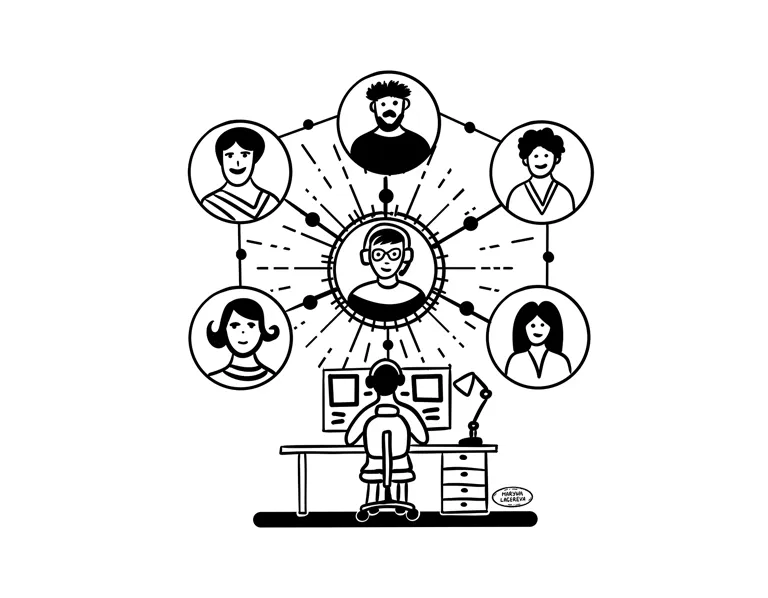
EventForge is a platform for gaming creators and their communities, and its one job is running interactive events together. For creators, that means designing an event, assigning roles to participants, keeping everyone on the same page, and tracking what actually happens once the event goes live. For fans, it means a real way to take part, not just typing in chat while someone else plays.
That second half matters as much as the first. On the big platforms today, fan participation mostly means comments, chat, and the occasional poll. But the people who care most about a creator’s content are exactly the ones who would show up, play a role, build something, or help moderate if there were a structured way to do it. EventForge gives creators the coordination tools and gives fans a seat at the table, through roles, contributions, and rewards.
To be clear about where this comes from:
It is not market research, it is a scar.
Every event tool I have seen since those machinima days was built for conferences or esports brackets, not for a creator who wants to run a story-driven night with forty of their regulars.
Why not just Discord?
Fair question, because Discord already does servers, roles, and event pings. The bet here is narrower. Discord is a chat tool that events are bolted onto, while this is built around the event itself (the scenario, the participant roles, the live tracking, the after-action stats). If that focus does not feel sharper than a well-run Discord plus a spreadsheet, the idea does not have a reason to exist, and that is the first thing to test before writing any code.
The market, without fake precision
Gaming is now a mainstream, billion-player industry, and the live, creator-driven side of it (streams, tournaments, community events) is where a lot of the energy has moved. Exact figures vary by source, but the direction is not in doubt. Audiences and creator counts keep climbing, and the tools to run events for those audiences have not kept up.
For this idea, the number that actually matters is how many mid-size creators run community events regularly, and how much pain that causes them. That number is smaller and harder to find in any report. My bet, from watching them do it live, is that the pain is real and the workarounds are ugly. That is a thing you validate with twenty conversations, not with a market chart.
Key features
Roles that make fans participants
Creators can define custom participant roles for each event, things like ‘Lead Strategist’ or ‘Creative Contributor’, so community members carry real responsibilities instead of just watching. A participant rating system lets people give each other constructive feedback after events, which rewards the reliable regulars and keeps collaboration healthy.
Picture a Star Citizen creator running a narrative mission night, with community members assigned as ‘Piracy crew’, ‘Salvage team’, or ‘Mining squad’ based on their in-game professions and skills. Everyone knows their job before the server fills up. That is the kind of structure our machinima shoots never had.
Scenario Builder
This is the heart of the platform for me. The Scenario Builder lets a creator design the event itself: objectives, tasks, phases, win conditions, whatever the format needs. A scripted roleplay night, a scavenger hunt, a community versus creator challenge, all of them start as a scenario that participants can actually read and follow. The plan finally lives in the same place as the people executing it.
Event creation and management
Around the scenario sits the boring but essential machinery: scheduling, customizable templates, automated reminders, and recurring event options. During live events, real-time participant tracking and engagement monitoring give the creator and their moderators a control room view, and streaming platform integrations keep the broadcast side simple.
A Fortnite creator could template a recurring Friday Community Showdown once, then let reminders and signups run themselves. During the session, participant queues and live tracking replace the moderator frantically alt-tabbing between five windows.
Customization
Both sides get to make the space theirs. Community members customize profiles with themes and avatars. The Minecraft player with the Creeper avatar and biome background gets to look like themselves. Creators go further with branded event pages and custom stream layouts, so an event feels like their show, not a generic lobby.
Analytics that answer real questions
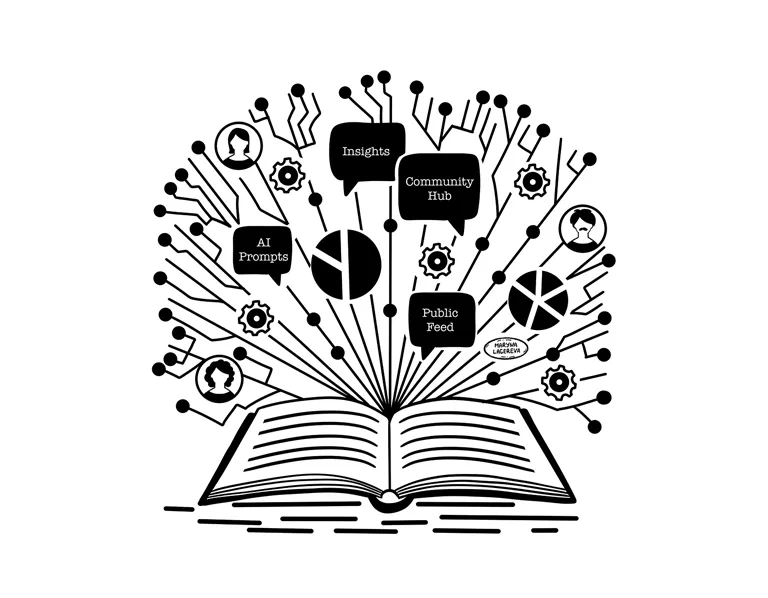
After each event, creators get the numbers that matter: registrations, participation levels, drop-off points, and audience sentiment during and after the event. A League of Legends creator running a weekly ARAM tournament can see which formats fill up, which ones bleed participants halfway through, and adjust.
The platform also keeps community rankings (highest rated events, most active moderators, top contributors). Recognition is cheap to give and it is half of why people volunteer their evenings.
How it could make money
Premium memberships
A premium tier for creators could include advanced analytics like session reports and loyalty tracking, branding options such as a custom URL and logo overlay on event pages, and priority support. For community members, a paid tier could mean an ad-free experience, early registration, exclusive events, deeper profile customization, and the option to donate to a creator for a higher rank in an event.
Something around $9.99 per month or $99 per year feels like the right neighborhood to start testing, with custom plans for bigger creators. Those are opening guesses, not projections; the real price comes from what the first paying creators say no to.
Sponsorships and brand partnerships
Gaming brands already sponsor creators, and sponsoring their events is a natural extension. Partnerships could unlock in-game content for participants or fund sponsored creator battles streamed to the partner’s channels, on a revenue share basis. This only works once the events are good, so it is a later chapter, not a launch feature.
Advertising
A small number of contextual ad placements, plus opt-in rewarded video for members who choose it, can round out revenue without junking up the interface. I would treat ads as the smallest and last lever, not a pillar.
How I would start, and the real walls
Here is the part I would get wrong if I let the feature list seduce me. The technology is not the wall. User accounts, event pages, role assignment, a scenario editor, live status, none of that is exotic. Any competent small team can build it.
The real wall is frontal competition. Discord already owns the community layer. StreamElements and Streamlabs own the stream-side tooling. Battlefy and Toornament own tournaments. A full EventForge platform asks creators to move their community’s center of gravity, and creators, rightly, refuse that trade unless the payoff is enormous.
The second wall is creator acquisition. Creators are busy, drowning in tool pitches, and their audience is their livelihood. Nobody experiments on their community with an unproven platform. You do not solve this with ads. You solve it by making five specific mid-size creators personally love the thing.
So the realistic MVP is not a platform at all. It is a simple event tool that plugs into a creator’s existing Discord instead of replacing it. The creator builds the scenario and defines the roles, members sign up through the server they already live in, and the event runs with live tracking and ends with clean after-action stats for the creator. If that thin slice beats the spreadsheet, there is a business to grow. If it does not, better to learn that in three months than in three years.
From there, the path is ordinary and healthy: a private beta with a handful of creators who run events monthly, brutal feedback loops, and only then the bigger platform ambitions (streaming integrations, monetization, the works).
Misuse and safeguards
Any platform that hands community members roles and visibility will attract the usual problems, so moderation has to be designed in, not patched on. That starts with clear community guidelines that every user agrees to at onboarding, explicitly covering spam, harassment, hate speech, and trolling.
On top of that foundation come automated filters to catch spam and obviously inappropriate content, an easy and visible reporting mechanism, and a graduated ladder of consequences from warnings to temporary suspensions to permanent bans. Critically, these tools belong in the hands of creators and their moderation teams, because they know their communities and they carry the reputational risk when an event goes sideways.
The operational risks are the standard ones and deserve standard answers: redundancy and load balancing against downtime, encryption and regular security audits against breaches, and honest ongoing attention to competitors, because in this space the incumbents can copy a good feature fast.
Closing
Strip away the feature list and this idea fits in one sentence. Creators run events with their communities all the time, and nobody has built them a proper tool for it. The concept survives contact with skepticism only if the Discord question gets a convincing answer, which is why I would test the thin plug-in version first and let real creators decide whether the focus earns its keep.
I would have used this fifteen years ago for our machinima shoots, and I would use it today. If you build it, tell me. I will be in the front row of your first event. Take the idea, reshape it, and rename it too. EventForge is only a placeholder. You owe me nothing, just tell me how it goes.