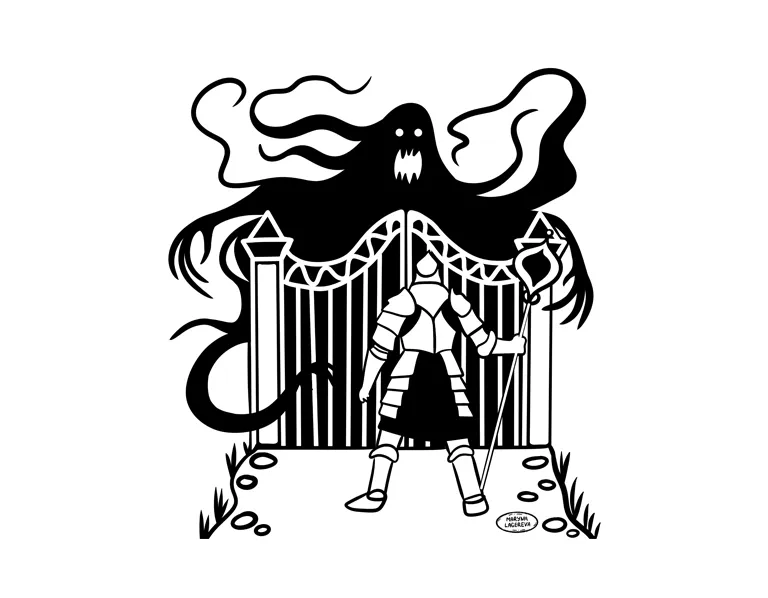
This one also started with colleagues and a conversation that went exactly one step too far. The first question was classic fandom material. Which Warhammer character would each of us actually be? Easy, fun, twenty minutes gone. Then someone flipped it, and the flipped version would not let go. If the Inquisition audited our actual, present-day lives, our opinions, our little compromises, what would count as heresy? And how damned would each of us be, precisely, in percent?
We laughed a lot building the answer. It is live at heresytest.com, the unofficial Warhammer 40,000 heresy test. Twelve questions. The Inquisition already knows the answers; this is merely a formality, for the file.
I have shipped serious products with less joy than this quiz. Somewhere between writing the third verdict and watching a colleague dispute his percentage out loud, I remembered that fun is a legitimate spec.
The experience is played completely straight, which is where all the charm comes from. The site is styled as an Ordo Hereticus proceeding: case file, interrogation, verdict. You answer twelve questions and receive your alignment (Monodominant, Amalathian, Recongregator, Xanthite or Renegade, a spectrum lore fans will recognize immediately), a heresy percentage, and your classification from puritan to radical. No signup, no email, nothing between you and your damnation.
The part that makes it multiplayer
Solo quizzes are a solved genre. The piece we are proudest of is the tribunal, a shared room where up to forty people answer the same questions and come out ranked, publicly, from purest to most damned. That single mechanic converts a two-minute diversion into a community event. A Discord server runs a tribunal the way it runs a movie night, and the results feed an evening of accusations, appeals and screenshots.
That is the transferable idea, the one you can steal without knowing what a bolter is. Personality quizzes have always been shareable, but they have rarely been playable together. The moment results become a leaderboard inside a group that already knows each other, the quiz stops being content and becomes a party game.
The ranking does something subtle that solo results cannot. A percentage on its own is a curiosity; a percentage two points above your best friend’s is a conversation. The tribunal turns the quiz’s real product (arguing about the results) into the interface itself, and the arguments are the retention loop: the loser demands a recount, the recount needs a new room, and the new room pulls in three people who missed the first one.
Market & Opportunities
The personality quiz is one of the most reliably viral formats the web has ever produced, and it keeps working because the product is self-expression. People share the result, not the quiz. Fandoms multiply the effect, because the result doubles as a badge of belonging.
The underserved segment is groups. Communities on Discord and elsewhere are constantly hungry for low-friction shared rituals, things a moderator can launch tonight, that need no accounts, no downloads and no explanations. A themed quiz with a group verdict fits that shape, and the format transfers to any fandom or workplace culture with strong archetypes to sort people into.
Key Features
- Twelve questions, played straight. Real-world situations filtered through an Inquisitorial lens, so the comedy comes from the framing, never from breaking character.
- Five verdicts drawn from the lore. The alignments are the actual ideological currents of the setting, which rewards fans and stays legible to newcomers. The verdict card is the artifact people share.
- A heresy percentage and a classification. Puritan to radical: a number to compare and argue about, which is what a good quiz result is for.
- Tribunal rooms for up to forty. One link, everyone answers, the room is ranked from purest to most damned. The group result is a second shareable artifact, and the better one.
- No signup, no email, no account. Free. The absence of friction is a feature, and for a fan work it is also good manners.
The honest tensions
The commercial one first, as always with this family of projects. Warhammer is Games Workshop’s IP, the site is explicitly free, non-commercial and unaffiliated, and it will stay that way. What you can take to market is the format: an in-character diagnostic with a group tribunal, wearing whatever universe you have the rights to, or none at all (an office “audit”, a cooking guild, a running club, because archetypes are everywhere).
The design tension is calibration. The quiz has to make people smile while respecting the canon, because the audience that will love it most is also the audience that will notice every liberty taken. Comedy that mocks the source dies with fans, while comedy that lives inside the source gets shared by them. Writing questions that map real life onto the lore without winking took more drafts than any of the code.
Next Steps: How I’d Build It
Write the verdicts before anything else. They are the product, the screenshot, the reason to share. Then work backwards to questions whose answers discriminate between them, and test the scoring on friends until the results feel unfairly accurate, because that feeling is the whole magic trick. Ship the solo quiz first. It is an afternoon of front-end once the writing exists.
The tribunal is version two, and its only hard requirement is being effortless: one shared link or room code, no accounts, results that render well as a screenshot. Resist every feature beyond that. The format is fragile precisely because it is small.
Closing
Heresy Test is a colleagues’ joke pushed to production quality, built together, and one of the most purely fun projects any of us has shipped. The tribunal awaits at heresytest.com. Bring your community, and may your file be thin.
The format is free, like everything here. Pick your universe, write five verdicts worth arguing about, and put a tribunal behind them. If you build this, tell me. My own file, for the record, is sealed.